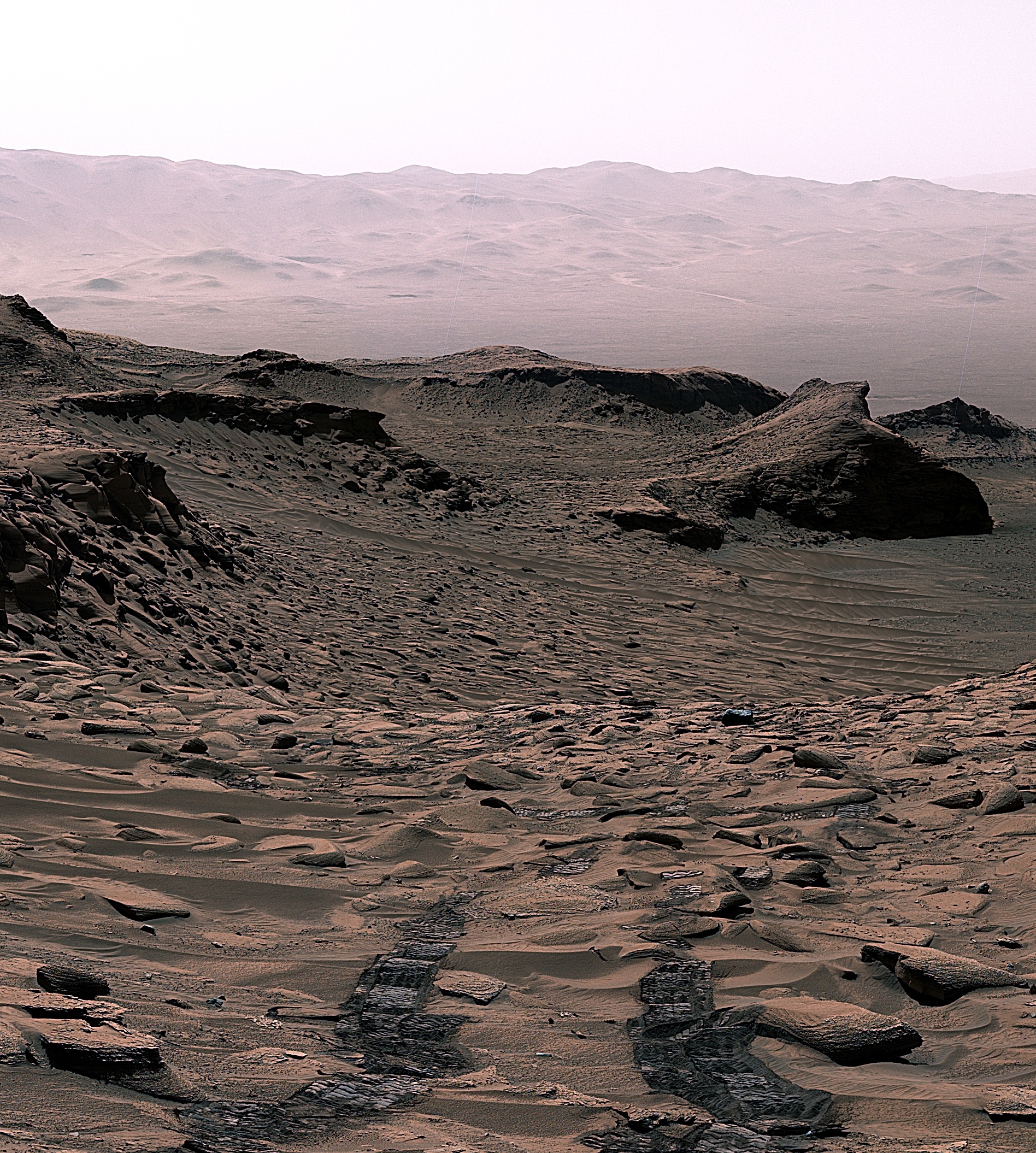
To study the Red Planet’s chemical and mineral makeup, Curiosity drills 1.2-1.6 inches (3-4 centimeters) down into the subsurface, then drops the powdered rock samples into its CheMin instrument. The instrument, led by NASA’s Ames Research Center in California’s Silicon Valley, uses X-ray diffraction to analyze rocks and soil. CheMin’s data was processed and analyzed by scientists at the Astromaterials Research and Exploration Science (ARES) Division at NASA’s Johnson Space Center in Houston.
“Drilling through the layered Martian surface is like going through a history book,” said Thomas Bristow, research scientist at NASA Ames and coauthor of the paper. “Just a few centimeters down gives us a good idea of the minerals that formed at or close to the surface around 3.5 billion years ago.”
The discovery of this carbonate mineral in rocks beneath the surface suggests that carbonate may be masked by other minerals in near-infrared satellite analysis. If other sulfate-rich layers across Mars also contain carbonates, the amount of stored carbon dioxide would be a fraction of that needed in the ancient atmosphere to create conditions warm enough to support liquid water. The rest could be hidden in other deposits or have been lost to space over time.
👇👇👇👇 [Google Ads]
In the future, missions or analyses of other sulfate-rich areas on Mars could confirm these findings and help us better understand the planet’s early history and how it transformed as its atmosphere was lost.
Curiosity, part of NASA’s Mars Exploration Program (MEP) portfolio, was built by the agency’s Jet Propulsion Laboratory, which is managed by Caltech in Pasadena, California. JPL leads the mission on behalf of NASA’s Science Mission Directorate in Washington.
For more information on Curiosity, visit:
👇👇👇👇 [Google Ads]
Feed By Today and Features – NASA's Jet Propulsion Laboratory
👇👇👇👇 [Google Ads]
You Might Also Like

If EPS Growth Is Important To You, Veekayem Fashion And Apparels (NSE:VEEKAYEM) Presents An Opportunity

Top 10 Stories of 2023: Fandom Drove Fashion and Flurry of Deals

NASA’s Tech Demo Streams First Video From Deep Space via Laser