

is a weekly column about how fashion intersects with the wider world.
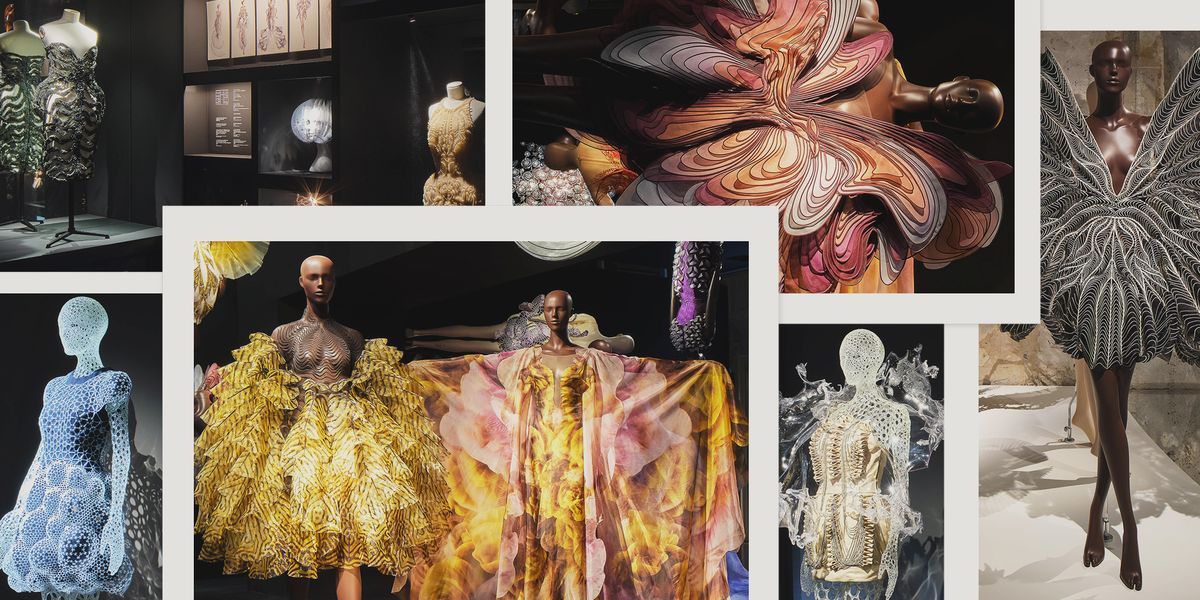
Stepping into the Musée des Arts Décoratifs’ exhibit you might be forgiven for thinking you’d stumbled upon the museum’s natural history wing by mistake. Yes, there are mannequins in van Herpen’s designs, but there’s also a row of microscopes, a wall of Petri dishes, and a Victoriana-chic cabinet of curiosities. The Dutch designer has always done things differently, drawing from science, technology, and nature for her otherworldly creations.
Van Herpen knew she wanted the show, which runs through April 28, to reflect her idiosyncratic artistic process. Combing through her archives also served as a way to zoom out on some of the themes that have cropped up over and over again in her designs, like water, dreams, and the cosmos. “A lot of people refer to my work as futuristic,” says van Herpen from Paris, while putting the finishing touches on the show. “But I think most of the inspiration actually comes from nature and much more historic references.” Thus, the fossils, skeletons, and other natural ephemera. “Some pieces are so timeless that you can see the direct connection between one of my works that looks futuristic,” she says, “and one of the fossils in the exhibition.”
👇👇👇👇 [Google Ads]
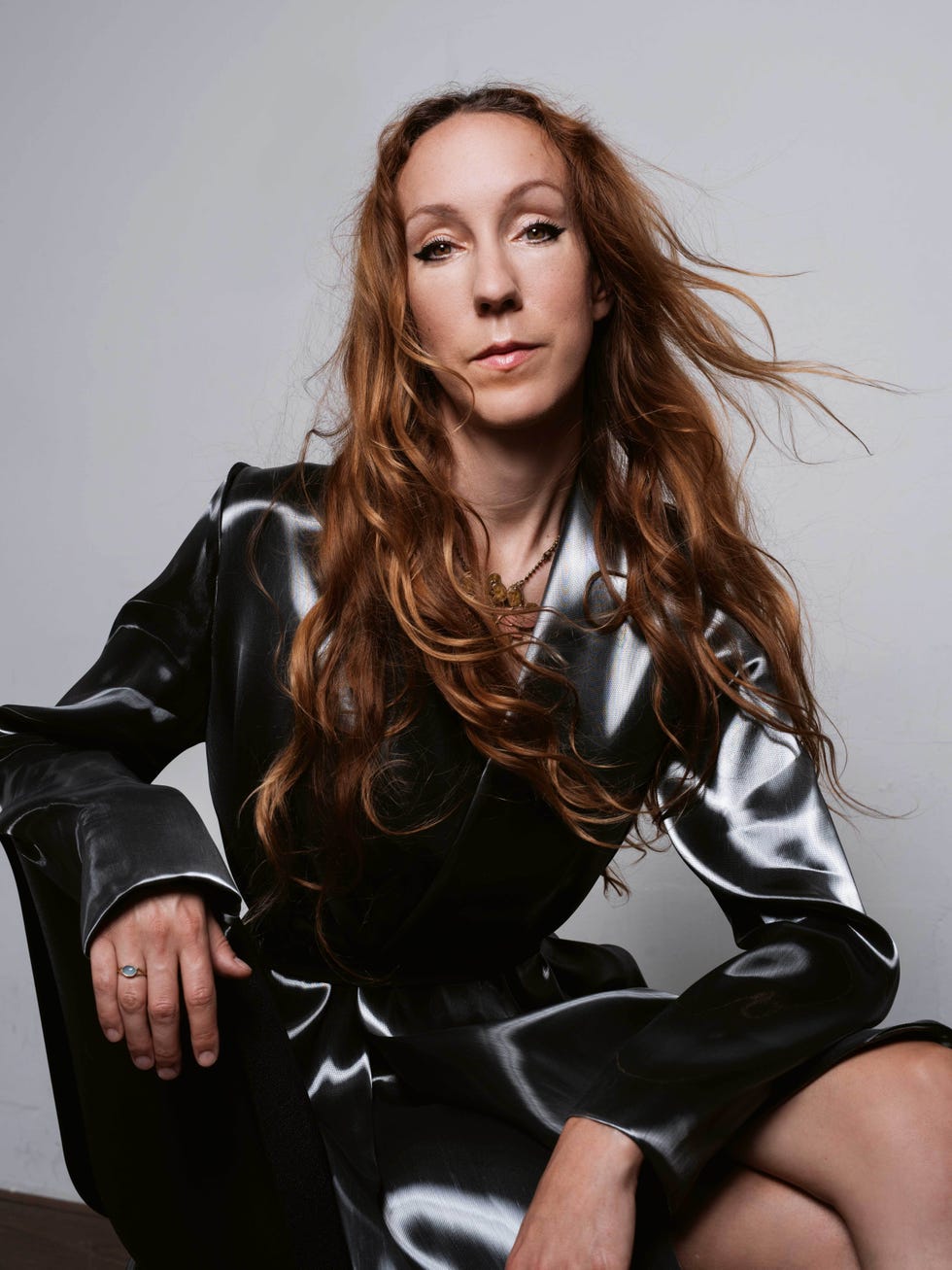
Designer Iris van Herpen.
She approaches her collections with a spirit of experimentation, whether that means or investigating the sartorial possibilities of and Van Herpen is most comfortable living along that right brain-left brain axis. “I would never call myself a scientist, but I do feel very inspired by certain scientists that I have conversations with,” she says. “And I love doing research. It brings new knowledge into fashion, and that also attracts a wider audience.” Some of her clients are “real fashionistas,” while others are more interested in biology, science, and architecture. “There’s a bridge that connects these worlds that are sometimes very closed off. Sometimes fashion can really be a bubble,” she says. “And it’s beautiful to break a bubble sometimes.”
👇👇👇👇 [Google Ads]
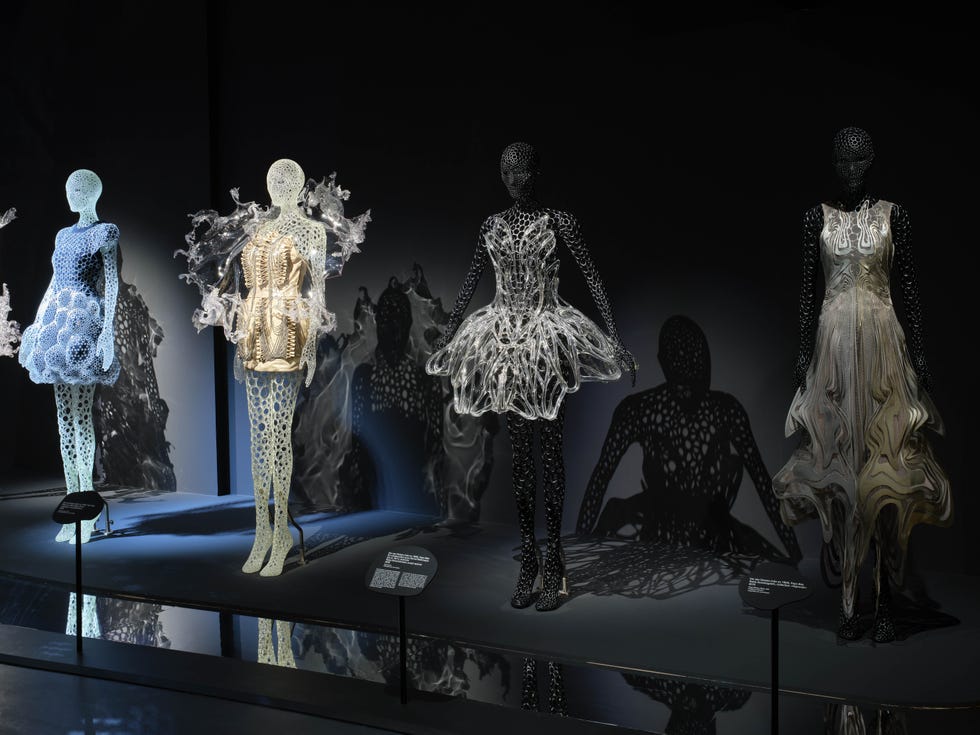
Inside the MAD Paris exhibit.
“I learned a lot about myself by looking so closely at the work,” and talking to curators Cloé Pitiot and Louise Curtis to get a new perspective, van Herpen notes. Rather than being a chronological account, the show is arranged thematically, featuring 140 pieces from her oeuvre. The themes were “the hardest part to decide on because there are so many influences in my work, from art to science, to dance, to nature, to architecture, and music,” she says. That, in turn, led her to think about the artists who have inspired her. Some created work expressly for the show, while others collaborated with her: the list includes Philip Beesley, Casey Curran, and the Collectif Mé. “A lot of it is based on sculpture because my work is so three-dimensional; I get a lot of inspiration from other artists working in three dimensions.” Each section is enhanced by the scenography work of Studio Nathalie Crinière and a soundscape by Salvador Breed.
👇👇👇👇 [Google Ads]
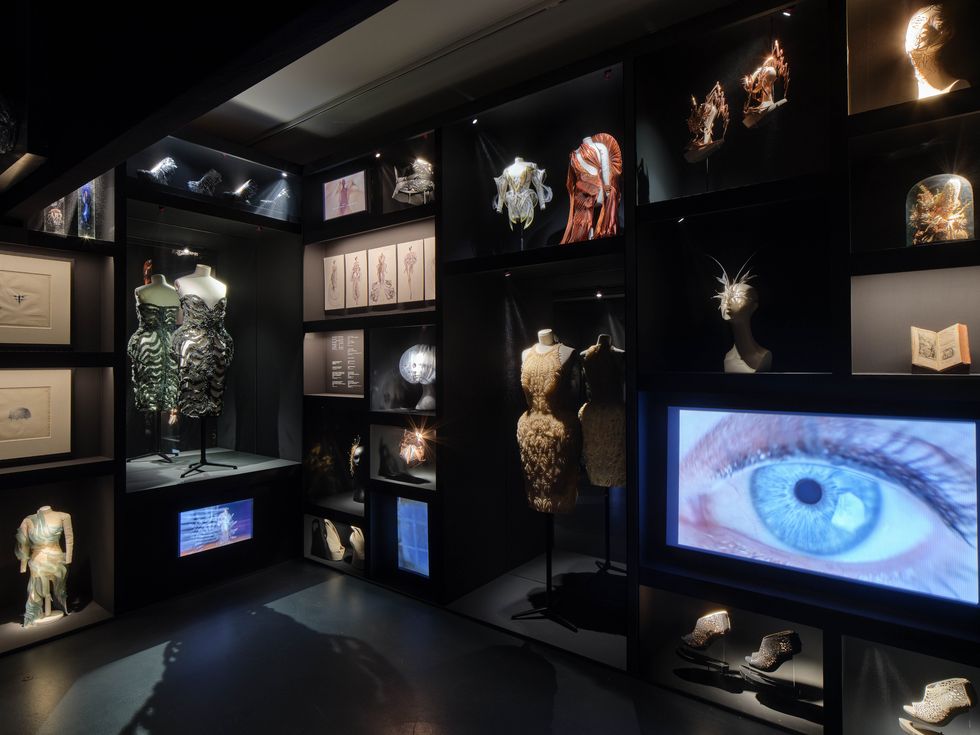
Inside the Iris van Herpen exhibit at the Musée des Arts Décoratifs.
She also included hundreds of samples, so “people can see all the trial and error that goes into the garment. You can see the evolution of craftsmanship [over] 16 years, from the very beginning up until now.” Museumgoers will get a window into the techniques behind her work, from 3-D printing to laser cutting, and can use the microscopes to zoom in on the materials she uses.
👇👇👇👇 [Google Ads]
All of this backstory “felt very important, because people get so curious when they see the looks,” she says. “With a more traditional, beautiful gown, you will have a feeling of how it’s made, even if you don’t know exactly. But with a lot of the techniques and materials that we work with, people have no clue.
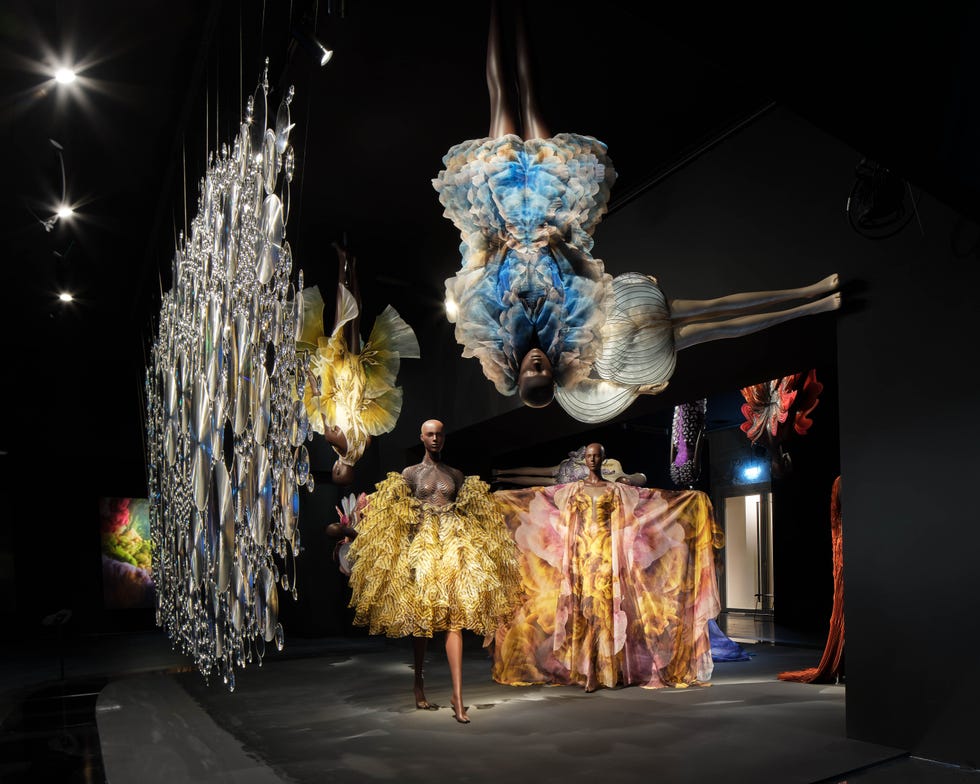
Scenes from inside the exhibit.
👇👇👇👇 [Google Ads]
Christophe DELLIÈRE
“Ultimately, I have always worked in a way that I want the designs to speak for themselves,” she adds. If you are curious about everything that is behind [them], I love sharing that. But if you don’t know it’s about innovation or technology or science or architecture, if you leave all of that out and you read nothing, I think the designs still speak, in a way.”
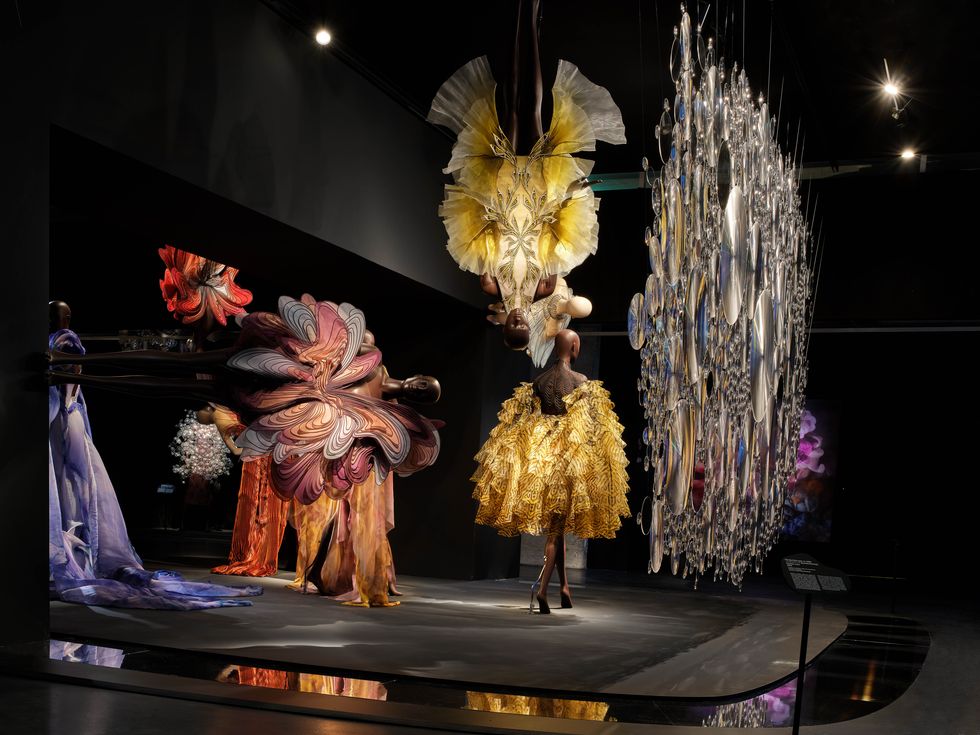
A look inside the exhibit.
👇👇👇👇 [Google Ads]
Christophe DELLIÈRE
In 2012, van Herpen had a solo exhibit at the Groninger Museum in her native Netherlands. She remembers young people telling her that after seeing it, they were inspired to pursue fashion or the arts. She hopes this show, situated as it is in the world capital of fashion, will be a similar feast for the imagination.

Véronique Hyland is ELLE’s Fashion Features Director and the author of the book , which was selected as one of The New Yorker’s Best Books of the Year. Her writing has previously appeared in The New York Times Magazine, The New Yorker, W, New York magazine, Harper’s Bazaar, and Condé Nast Traveler.
👇👇👇👇 [Google Ads]
Views: 768
