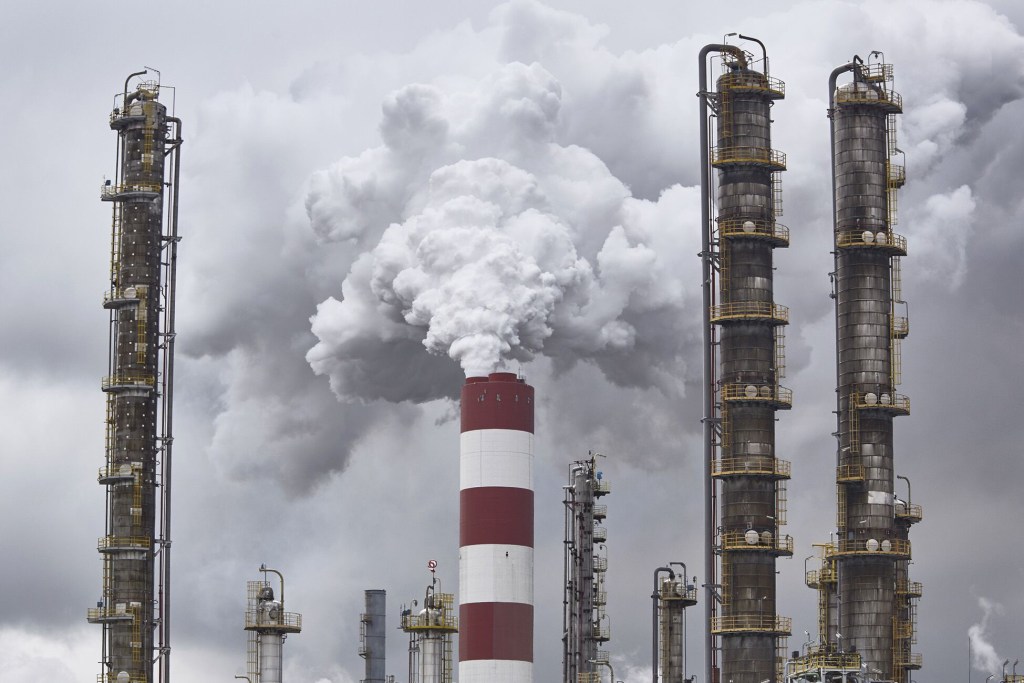
Emissions rise from smokestacks at an oil refinery in Plock, Poland. Bartek Sadowski/Bloomberg, file
The world’s largest banks are showing little or no progress when it comes to their promise to help the world avoid the worst consequences of global warming.
👇👇👇👇 [Google Ads]
👇👇👇👇 [Google Ads]
Charles Scharf, chief executive of Wells Fargo, which had the worst low-carbon energy financing ratio among major U.S. banks, including JPMorgan Chase, Bank of America and Citigroup. Ting Shen/Bloomberg
“The divergence between real-economy spending and bank financing can in large part be explained by the interest-rate environment,” White said. “In regions where borrowing costs went up, companies’ demand for bank-facilitated capital plummeted. Meanwhile, those companies – both low-carbon and fossil fuels – had lots of their own cash flows available to spend while they borrowed less.”
👇👇👇👇 [Google Ads]
👇👇👇👇 [Google Ads]
👇👇👇👇 [Google Ads]
👇👇👇👇 [Google Ads]
👇👇👇👇 [Google Ads]
C.S. Venkatakrishnan, chief executive of Barclays. Of the 20 largest banks ranked by financing volume, Barclays’ energy-supply banking ratio was the highest. Christopher Goodney/Bloomberg
Of the 20 largest banks ranked by financing volume, none had an ESBR close to 4.0. Barclays’ ratio was the highest, at 1.55; Bank of Nova Scotia’s was the lowest, at 0.32.
Regionally, the U.S. and China are far behind Europe. And while banks in North America accounted for the largest share of energy-supply financing, their average ESBR was roughly 0.5 at the end of 2022, compared with 2.8 for European-based banks. Chinese banks had an average ESBR of 0.6.
👇👇👇👇 [Google Ads]
👇👇👇👇 [Google Ads]
Invalid username/password.
👇👇👇👇 [Google Ads]
Please check your email to confirm and complete your registration.
👇👇👇👇 [Google Ads]
Use the form below to reset your password. When you’ve submitted your account email, we will send an email with a reset code.
👇👇👇👇 [Google Ads]

You Might Also Like