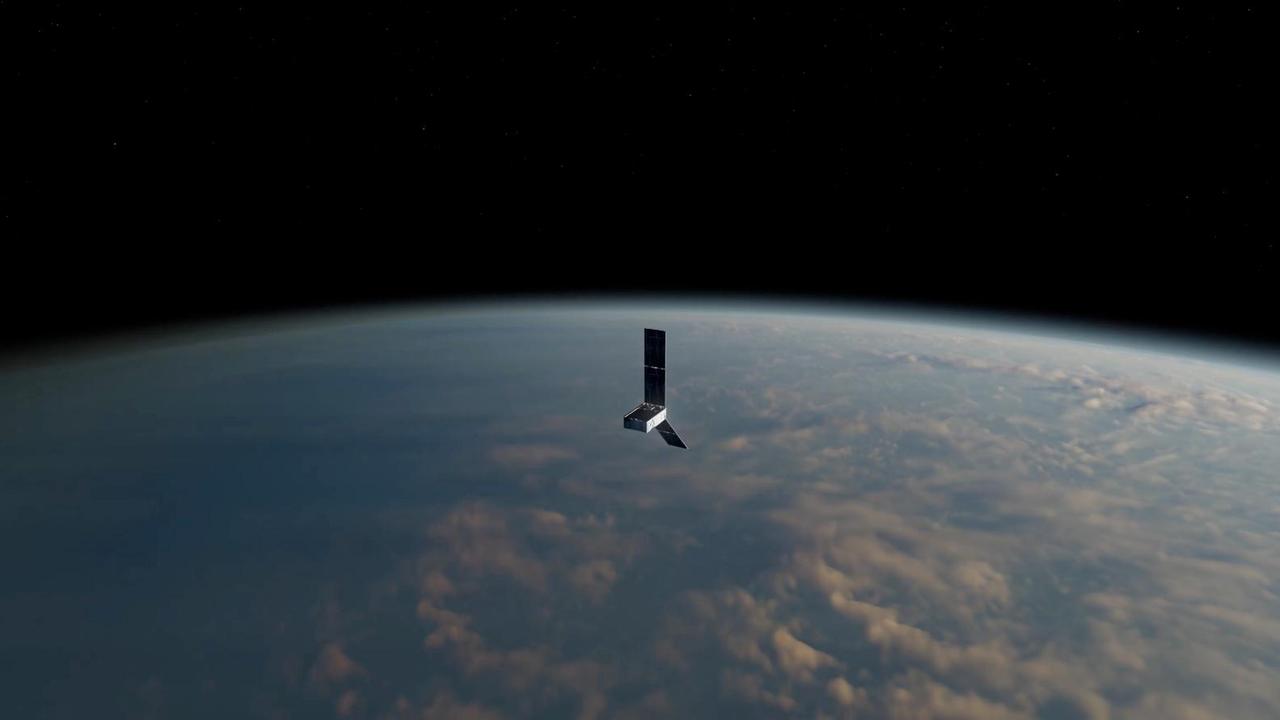
“Our spacecraft has opened its eyes on the universe,” said Olivier Doré, project scientist at Caltech and NASA’s Jet Propulsion Laboratory, both in Southern California. “It’s performing just as it was designed to.”
The SPHEREx observatory detects infrared light, which is invisible to the human eye. To make these first images, science team members assigned a visible color to every infrared wavelength captured by the observatory. Each of the six SPHEREx detectors has 17 unique wavelength bands, for a total of 102 hues in every six-image exposure.
Breaking down color this way can reveal the composition of an object or the distance to a galaxy. With that data, scientists can study topics ranging from the physics that governed the universe less than a second after its birth to the .
👇👇👇👇 [Google Ads]
“This is the high point of spacecraft checkout; it’s the thing we wait for,” said Beth Fabinsky, SPHEREx deputy project manager at JPL. “There’s still work to do, but this is the big payoff. And wow! Just wow!”
During the past two weeks, scientists and engineers at JPL, which manages the mission for NASA, have executed a series of spacecraft checks that show all is well so far. In addition, SPHEREx’s detectors and other hardware have been cooling down to their final temperature of around minus 350 degrees Fahrenheit (about minus 210 degrees Celsius). This is necessary because heat can overwhelm the telescope’s ability to detect infrared light, which is sometimes called heat radiation. The new images also show that the telescope is focused correctly. Focusing is done entirely before launch and cannot be adjusted in space.
Feed By Today and Features – NASA's Jet Propulsion Laboratory
👇👇👇👇 [Google Ads]
Views: 784